Grassroots trust, engineered for scale.
Action for Sustainability Initiative is a lean, technology-backed NGO working across health, education, environment, leadership and livelihoods, turning community trust into measurable, lasting change.
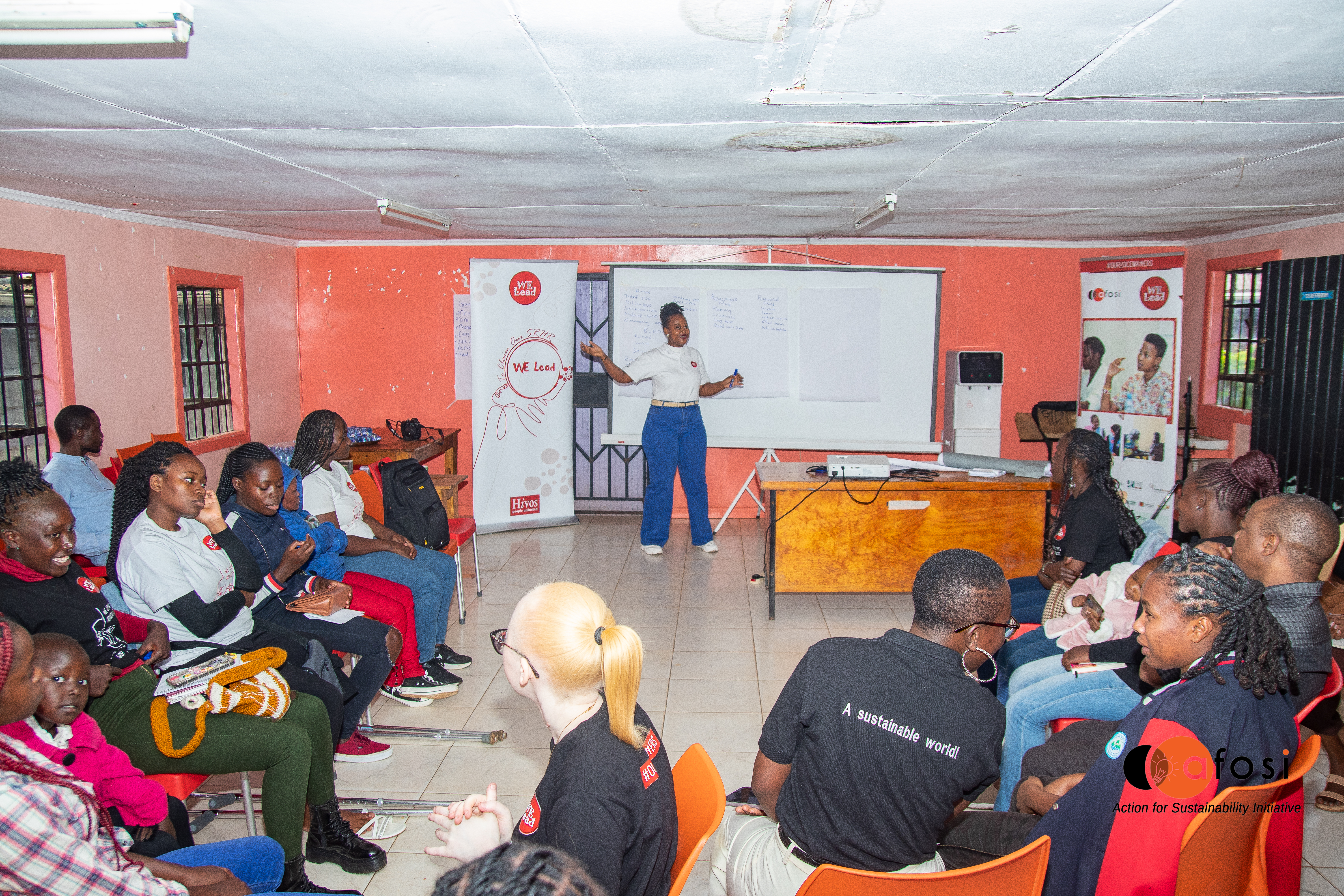
A hybrid model, built for real impact.
Action For Sustainability Initiative (AFOSI) is a lean, technology-backed local NGO addressing challenges across health, education, livelihoods, leadership and governance, climate justice and humanitarian support.
Our flagship initiatives, Sheria ya Vijana, M.A.T.H, Youth Voices Lab, and YOMA Projects, are implemented through our digital tools, including the Kiongozi Platform, Kenya Youth Climate Hub (KYCH), and Afosi Hub startup management platform.
We adopt a hybrid implementation model combining the community reach and trust of a grassroots NGO with the innovation and agility of social enterprises, creating sustainable impact across Kenya.
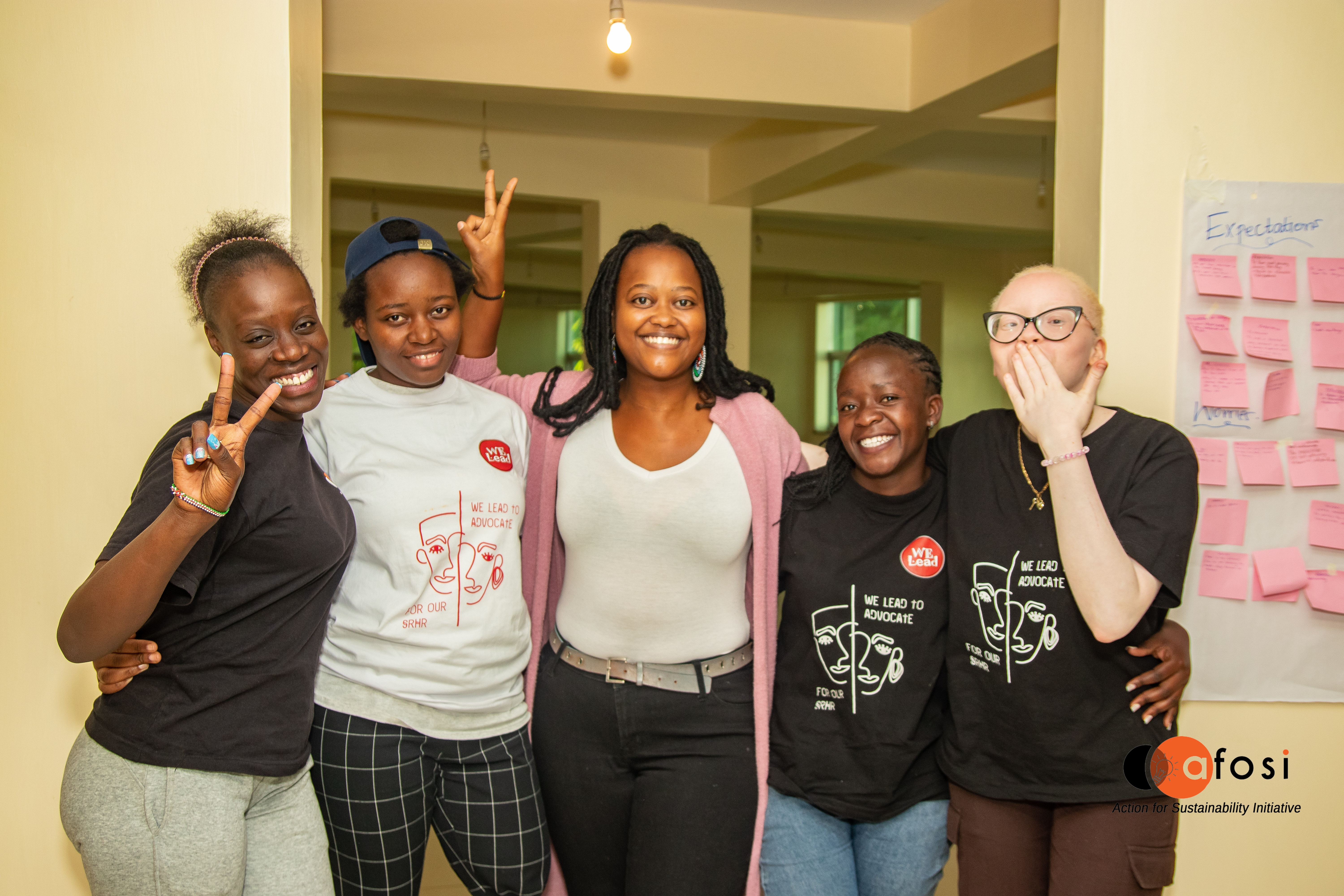
What we're actually trying to solve.
Each of AFOSI's six pillars starts from a real problem, not a project. Below is the issue each one addresses and the strategic objectives — drawn from our internal strategic plan — that guide how we respond to it.
Health
Health is an asset the poorest cannot afford to lose. In Nairobi's informal urban settlements, livelihoods depend directly on wellbeing — on access to medical care, a healthy living environment, and the ability to make informed choices about one's own body. For young women living with HIV or with disabilities, these barriers compound: stigma, distance to services, and a lack of youth- and disability-friendly care all stand between people and the health outcomes they deserve. Mental health is part of this picture too — a critical, often overlooked need whose neglect undermines every other gain.
- To improve the sexual and reproductive health outcomes of women and youth in Nairobi's informal urban settlements, through enhanced community awareness, increased access to comprehensive SRH services, and strengthened women-, youth- and disability-friendly support systems.
Education
Education is one of the strongest levers against extreme poverty — it empowers individuals, expands opportunity, and builds stronger communities. But for youth in Nairobi's informal urban settlements, that lever is often out of reach: limited access to quality STEM education, few pathways from school into a career, and — specific to the communities we work in — schools left out of national policy on climate and sustainability, even though their students face the sharpest edge of environmental change. Closing that gap means combining classroom access with real advocacy, including for Education for Sustainable Development (ESD), so children and youth have a voice in shaping the policies that determine their environment and future.
- To empower underserved communities through access to equitable STEM education and technology, and to cultivate 21st-century skills, foster innovation, and drive positive social impact.
- To increase access to and participation in high-quality STEM education for youth in informal urban settlements, improving academic performance and opening pathways into STEM-related careers.
- To establish and scale a sustainable career mentorship program for youth in Nairobi's under-resourced communities, empowering students to make informed career decisions and build the skills they need to succeed.
Environment
Every country depends heavily on its environment — forests, grasslands, rivers, lakes, coral reefs and the wider web of ecosystems that support both life and economic stability. In Kenya's urban informal settlements, that dependency is felt hardest and fastest: flooding, poor waste management, and weak climate resilience hit families with the fewest resources to absorb the shock. AFOSI works to change that from the ground up, building conservation and resilience with the communities most exposed to environmental risk, not around them.
- To enhance climate change resilience and conservation through collaborative, community-led initiatives that support sustainable practices.
Livelihoods
Livelihood security for every family means increased income, access to resources, sustainable employment, and better opportunities for food, education and health. For youth and women in Nairobi's informal settlements, that security is often blocked by structural barriers — limited access to markets, capital and skills, and policies that were never designed with their realities in mind. AFOSI addresses this on three fronts at once: direct skills and market access, building an actual pipeline for youth-led enterprise, and pushing for the policy change that removes the barriers in the first place.
- To sustainably improve the economic wellbeing and resilience of youth and women within Nairobi's informal urban settlements, through enhanced access to skills, resources and markets.
- To establish AFOSI as a leading hub for innovation and entrepreneurship in Africa, through the incubation, funding and scaling of high-impact, market-ready startups that address key societal challenges.
- To contribute towards the enactment of policies that address the barriers to entry limiting people's livelihood options.
Leadership & Governance
Strong leadership and transparent governance foster accountability, equity and sustainable development within communities. Where those structures are weak or exclusionary, the people closest to a problem — often youth and women — have the least power to act on it. AFOSI works to close that gap by building leadership and governance capacity directly inside grassroots communities, so the people affected by local decisions are equipped to shape them.
- To strengthen inclusive and accountable leadership and governance structures within grassroots communities through training and skills enhancement, enabling communities to effectively address local challenges and sustainably manage their resources.
Humanitarian
Beyond our five core pillars, AFOSI responds to humanitarian needs as they arise in the communities we serve — from menstrual health education and STEM mentorship to mental-health support for youth and women facing acute hardship. This work doesn't yet have a formally published strategic framework the way our other pillars do; as that's defined, we'll expand this section to match.
We envision a world where every young person, regardless of gender, ability or background, can harness their full potential to build sustainable, thriving communities.
We do what we say, and measure whether it worked.
Technology in service of people, never the other way round.
Youth, women and the marginalized lead the work.
Impact that outlasts the funding cycle.
Everything about AFOSI, in one PDF.
Scan the code with your phone camera to open our organizational brochure on your own device, or download it directly below.
Download the brochure